

Smile Makeover
When you’re happy with your smile, you’re able to greet the world confidently, both personally and professionally. Concerns about your smile can undermine that confidence. If you’d like to correct imperfections in your smile, cosmetic dentistry can transform your look and your outlook with innovative treatments designed to create the smile you’ve always wanted.
Why Choose a Smile Makeover?
Deciding whether you want a smile makeover involves a combination of personal desire, dental health considerations, and a consultation with a cosmetic dentist. Here are some steps and factors to consider:
-
Self-Assessment:
-
Dissatisfaction with Smile: Reflect on your feelings about your smile. Are you self-conscious about certain aspects of your teeth or gums?
-
Appearance Concerns: Identify specific issues such as discoloration, chips, gaps, misalignment, or missing teeth that bother you.
-
-
Functionality:
-
Bite Issues: Consider if you have any functional problems like difficulty chewing or speaking, which might also be improved with a smile makeover.
-
Comfort: Assess if there is any discomfort associated with your teeth or jaw that could be addressed.
-
-
Dental Health:
-
Regular Dental Checkups: A smile makeover typically builds on a foundation of healthy teeth and gums.
-
Existing Conditions: Note any existing dental conditions such as decay, gum disease, or damage that need to be addressed first.
-
By thoroughly evaluating these factors, you can make a well-informed decision about whether a smile makeover is right for you.
Procedures
Some of the reasons people are unhappy with their smiles include stained teeth, gaps, irregular gum lines, damaged or missing teeth, and misalignments. Your dentist can help you achieve a healthy, aesthetically pleasing smile with a range of treatment options, including:
Teeth Whitening
Surface staining can be caused by external factors such as diet, tobacco use, or inadequate oral hygiene. Brighten your smile with a whitening treatment in your dentist’s office. Professional whitening is generally faster, more effective, and longer-lasting than at-home products. If deep stains make whitening treatments impractical, you might consider bonding or veneers.
Tooth Contouring
Small chips, minor size and shape irregularities, slight overlaps—teeth which need minimal cosmetic restoration can benefit from tooth contouring. Your dentist will remove a small amount of enamel to reshape tooth and then polish it for a smooth, even appearance. Contouring is cost-effective and generally requires no anesthetic, but cannot be used to treat more seriously damaged or misaligned teeth.
Bonding
In this procedure, composite resin is shaped and bonded to the tooth’s surface to repair minor chips and cracks, cover discolored enamel, close small gaps between teeth, reshape undersized, crooked, or misshapen teeth, and rebuild areas where enamel erosion has taken place. Bonding is convenient, cost-effective, and minimally invasive.
Veneers
A dental veneer is a thin, translucent, durable porcelain shell which is custom-made to cover the front of a damaged tooth. Like bonding, veneers can restore the appearance of teeth with chips, cracks, and stains, can close small gaps between the teeth, and can reshape misshapen or slightly misaligned teeth.
Crowns
Crowns cover the entire tooth above the gumline. Porcelain and ceramic crowns look like natural teeth and can be used to restore the appearance of teeth with more serious fractures, cracks, and shape irregularities.
Implants
Implants are natural-looking and functional replacements for lost teeth. A screw-like post is implanted in the jawbone, where it fuses with the bone over several months to act as the tooth’s “root.” Once the post is secure in the jaw, a replacement tooth, usually in the form of a crown, is fixed in place. Implants do more than make your smile complete again; they help prevent the jawbone underneath the lost tooth from shrinking and stop nearby teeth from shifting out of place.
Crown Lengthening
Also known as a gum lift, this procedure is frequently used to treat a “gummy smile.” When excess gum tissue covers the tooth surface, teeth appear shorter and smaller. During a gum lift, small areas of excess gum tissue are removed to reveal more of the tooth’s structure, making teeth look longer and more proportional.
Gum Contouring
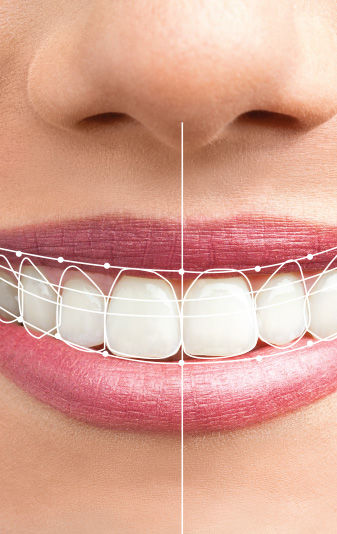
Gum contouring is another common periodontal procedure. An uneven gum line can make one or more teeth appear misshapen or shorter than the rest, causing a “crooked smile.” Gum contouring aesthetically reshapes the gum tissue for a natural-looking, even gum line.
Gum Grafts
When gum recession exposes the roots of the teeth, teeth appear longer and the roots are more vulnerable to decay. Gum grafting replaces missing gum tissue with your own or donor tissue to create an attractive, healthy gum line that protects your roots while enhancing your smile.
Aligners
Clear aligners are a discreet way to treat tooth and bite misalignment. Today’s aligners can treat a variety of orthodontic conditions, and are inconspicuous, efficient, and convenient. Your dentist can let you know if aligners will work for you.
